


Cart
Your shopping cart is empty!
It's never too late to make things right :)


Vitamins for athletes are not a special group of supplements. They are ordinary vitamins and minerals chosen by people who train regularly. This article explains in plain words where to start, how multivitamins differ from single vitamins, which vitamins for people who train are chosen most often and how to avoid getting a double dose from different products.
The body gets vitamins and minerals mostly from food. Some it cannot make at all, and others it makes only partly. Products labelled "for athletes" usually contain the same substances as other supplements: vitamins, magnesium, zinc, omega-3. The difference is in the choice of ingredients and the form, not in a "special effect".
Athletes and people who train often pay attention to vitamins and minerals because heavy training, regular sweating and strict diets change what they eat. But a supplement only complements your diet.
Before buying vitamins for people who train, look at your plate. The basics are:
If you eat a varied diet, you may need few supplements. If your diet is monotonous, you are losing weight, you have cut out food groups (for example, you eat plant-based) or you rarely get sun, supplements can fill gaps. What you personally need is best worked out with a doctor, based on blood tests.
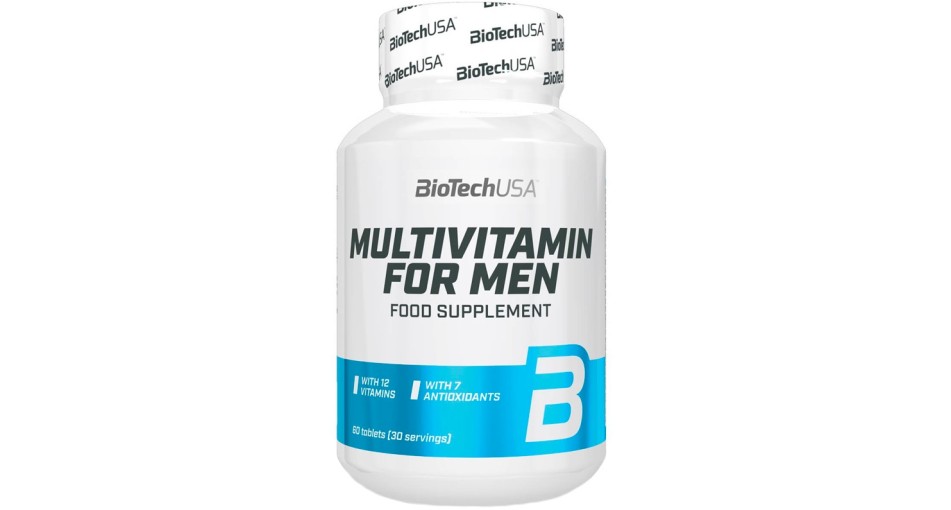
Multivitamins. One product with a set of vitamins and minerals. Handy when you do not want to deal with each substance: one pack instead of five. Example: Biotech USA Multivitamin for Men. All complexes are collected in the Multivitamins section, and there is a general overview in Multivitamins: what they are and how to take them.
Single vitamins and minerals. Chosen when you know exactly what is missing, or when a complex contains too little of a substance. The downside: more packs and a higher risk of mixing up servings.
A simple approach: a multivitamin as the base, and a single supplement added only when needed and with what the complex already contains in mind.
Made in the skin under sunlight and partly supplied by oily fish and eggs. Vitamin D contributes to the normal function of the immune system and to normal muscle function. Example: OstroVit Vitamin D3 2000 IU. More: Vitamin D3: what it is and how to take it. Do not exceed the serving on the pack, and it is better to learn your vitamin D level from a blood test.
A mineral found in grains, nuts, seeds and leafy greens. Magnesium contributes to the reduction of tiredness and fatigue and to normal muscle function. There are different forms (citrate, malate, bisglycinate and others). Example: OstroVit Triple Magnesium + B6 P-5-P. How the forms differ is explained in Different forms of magnesium: which one to choose.
A mineral found in meat, eggs and pumpkin seeds. Zinc contributes to the normal function of the immune system. Example: OstroVit Zinc Picolinate. About forms and how to take it: Zinc: what it is and how to take it.
A group of vitamins found in meat, eggs, dairy and legumes. Vitamin B6 and vitamin B12 contribute to the reduction of tiredness and fatigue. People who do not eat animal products often pay particular attention to B12. Example: OstroVit Vitamin B12 Methylcobalamin. More: B vitamins: what they are and how to take them.
The fatty acids EPA and DHA found in oily fish. EPA and DHA contribute to the normal function of the heart; the beneficial effect is obtained with a daily intake of 250 mg of EPA and DHA. Check the pack for how much EPA and DHA a serving contains. Example: OstroVit Omega 3 Extreme. More: Omega-3: what it is and how to take it.
Iron is taken only after a blood test and on a doctor's advice. Too much iron is dangerous, so it is not taken "just in case". If a doctor has recommended iron, the serving and duration are set by the doctor.
The most common mistake: a complex, a separate vitamin D, omega-3 with D3 and K2, magnesium with B6 or a pre-workout. Each of them may contain the same substance. To avoid taking too much:
Do I need vitamins if I train?
It depends on your diet. If you eat a varied diet, the need may be small. It is best to discuss this with a doctor.
Which minerals for athletes are chosen most often?
Magnesium and zinc, and also iron, but only as prescribed by a doctor after a blood test.
Can I take a multivitamin and single vitamins together?
Yes, if you check the composition and do not exceed the serving on the packs.
When is the best time to take vitamins?
Usually with a meal. Follow the instructions on the pack.
Do supplements replace food?
No. Food supplements are not a substitute for a varied diet. If you have a chronic condition, take medication, are pregnant or are breastfeeding, talk to your doctor.
Single vitamins (D, B, C, zinc and others) are collected in the Single vitamins section. Warehouse in Lviv, pickup available, delivery across Ukraine.