


Cart
Your shopping cart is empty!
It's never too late to make things right :)


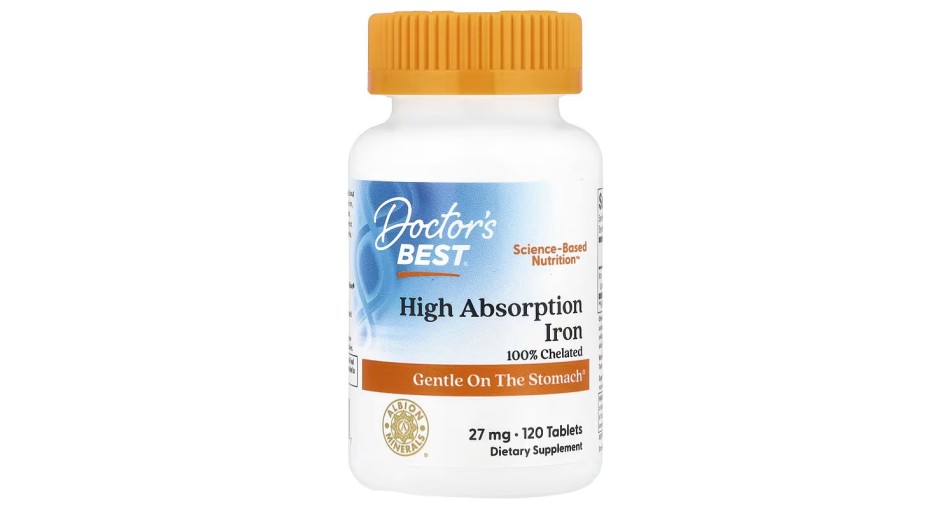
Iron is a mineral the body needs every day. It often comes up in talk about tiredness, diet and sport, so many people look for iron in tablets or capsules. Here we explain in plain words what iron is, why people take it, how the forms differ (iron bisglycinate, fumarate, sulfate) and how to take iron without harming yourself.
Iron is a trace element: you need only a little, but the body does not work normally without it. Iron is part of haemoglobin, the protein in red blood cells that carries oxygen. The body does not make iron itself, so it gets it from food: red meat, liver, eggs, legumes, buckwheat, pumpkin seeds and leafy greens.
If your diet is varied, iron comes from food. A supplement is chosen when the diet is one-sided or restricted (for example plant-based), or when a doctor advises adding iron after blood tests.
The following claims are approved for iron in the European Union. Here they are, with no embellishment and no promises:
That is the answer to "what is iron for". A supplement does not treat any disease and does not replace a varied diet. It only helps you get enough of this mineral if food does not provide it.
With most minerals you can experiment carefully, but not with iron. Excess iron is not desirable, and tiredness can have many causes, not only a lack of iron. So before you start taking iron, get a blood test and talk to a doctor. The doctor will decide whether you need a supplement, what serving and for how long.
Do not give iron to children without a doctor's advice. Keep iron supplements out of reach of children.
We do not treat anaemia and do not suggest treating it with supplements from the site. If you suspect a health problem, see a doctor first.
The label usually states the chemical form of iron. The most common ones:
Examples of iron supplements in our catalogue: Now Foods Iron 18 mg, Now Foods Iron 36 mg, OstroVit Pharma Ferr Aid. Check the composition and the form of iron on the label or in each product description.
All options are collected in the Iron section.
Athletes and people with busy schedules often ask about iron because it is linked to oxygen transport and to tiredness. But that is a reason to look at your diet and check your blood tests, not to buy a supplement at random. If a doctor has confirmed that you need iron, a supplement helps you get it in a convenient form. If not, a varied diet is enough.
Can I take iron without tests?
We do not recommend it. Excess iron is not desirable, so start with a blood test and a talk with your doctor.
Iron tablets or capsules?
Basically it is a matter of convenience. What matters more is the form of iron and how much is in a serving.
Can children take iron?
Only as prescribed by a doctor. Keep the supplement out of children's reach.
How does iron bisglycinate differ from sulfate?
They are different chemical forms. Bisglycinate is a chelated form with glycine, sulfate is a salt form. Ask your doctor which suits you.
Who should talk to a doctor?
Everyone, before taking iron. Especially if you have chronic conditions, take medication, are pregnant or breastfeeding.
Dietary supplements do not replace a varied diet. If you have chronic conditions, take medication, are pregnant or breastfeeding, talk to your doctor.
You can buy iron tablets and capsules from Doctor's Best, Now Foods and OstroVit in the Iron section. Warehouse in Lviv, pickup available, delivery across Ukraine.