


Cart
Your shopping cart is empty!
It's never too late to make things right :)


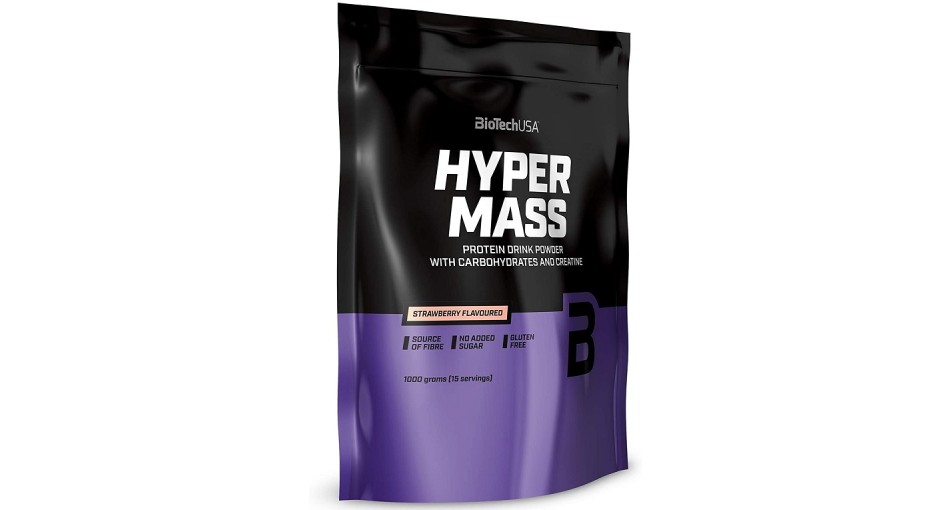
Want to know how to build muscle mass without getting lost in internet advice? Gaining muscle comes down to a few simple things: enough food, regular strength training with progression, proper rest and patience. Supplements are only helpers in this picture. Here is how it works, step by step, and what not to expect.
For muscles to grow, the body needs three things at the same time: a signal from training, building material from food and time to recover. If one of them is missing, results will be slow no matter how many supplements you buy.
The basis of gaining mass is a small calorie surplus: you eat a little more than you burn. If you eat the same or less, the body simply has nothing to build new tissue from. A sudden, extreme bulk is not a good idea either: fat grows quickly along with muscle.
How to do it in practice:
A word on protein. It is the main building material for muscles, so it should be a constant part of a mass-gaining diet: meat, poultry, fish, eggs, cottage cheese, dairy, legumes. The exact amount depends on your weight, experience and goals, so follow a specialist's recommendations. Do not forget carbohydrates (grains, potatoes, bread, fruit): they provide energy for training, while fats from plant sources and fish are needed for normal metabolism.
Muscles grow in response to a load they are not used to. That is why the basis of gaining mass is strength training, not cardio alone.
Muscles are built not in the gym but during rest after training. So your daily routine is also part of the plan.
Supplements for gaining mass do not replace food and training. They help when something is missing in your diet or eating enough is inconvenient. Here are the three most common ones.
Protein contributes to a growth in muscle mass and to the maintenance of muscle mass. Protein powder is a convenient way to add protein to your diet: a shake is easy to take to the gym or to work. It is not magic, it simply replaces one more portion of protein food. The options are collected in the Protein section, and you can read about how concentrate, isolate and hydrolysate differ and how to take them in the article Protein: what it is and how to take it.
Creatine increases physical performance in successive bursts of short-term, high-intensity exercise. The beneficial effect is obtained with a daily intake of 3 g of creatine. That is why it is chosen by people who train with weights. Creatine does not replace training and nutrition: it helps when you train regularly and get enough protein in your diet. All options are in the Creatine section, and you will find more about forms and how to take it in the article Creatine: what it is and how to take it.
A gainer is a powder mix of carbohydrates and protein. It is chosen by people who find it hard to eat the required amount of food: lean people, those with a small appetite or a very busy schedule. A gainer provides extra calories as a shake, which is easier to drink than one more plate is to eat. If you have no trouble eating enough regular food, you do not need a gainer. You can look at the options in the Gainers section, and the article Gainer: what it is and how to take it explains how to use it.
Gaining muscle is a slow process. How much you gain depends on age, genetics, experience, routine and nutrition, and nobody can honestly promise a specific number of kilograms in a specific time. There is no supplement that builds muscle without training. Scale weight can rise for reasons other than muscle, and that is normal. Judge the result over several months: by your strength in the gym, photos, measurements and how you feel.
Food supplements are not a substitute for a varied diet. If you have chronic conditions, take medication, are pregnant or breastfeeding, consult a doctor.
Can I gain muscle without supplements?
Yes. Supplements are only a convenience. What matters is food, training and recovery.
Where should a beginner start?
With eating habits and basic exercises. It is useful to read the article Sports nutrition for beginners.
What should I choose for gaining mass: protein or a gainer?
If you are short of protein specifically, choose protein. If it is hard to eat enough calories overall, you can consider a gainer.
When should I take creatine?
Timing matters less than consistency. The serving is shown on the package.
How long until I see results?
It is individual. Progress is usually judged after several months of regular work.
A systematic approach helps you gain muscle mass, and supplements for gaining mass, protein, creatine and a gainer, can be chosen in the sportshop.ua catalog. Warehouse in Lviv, pickup available, delivery across Ukraine.