


Cart
Your shopping cart is empty!
It's never too late to make things right :)


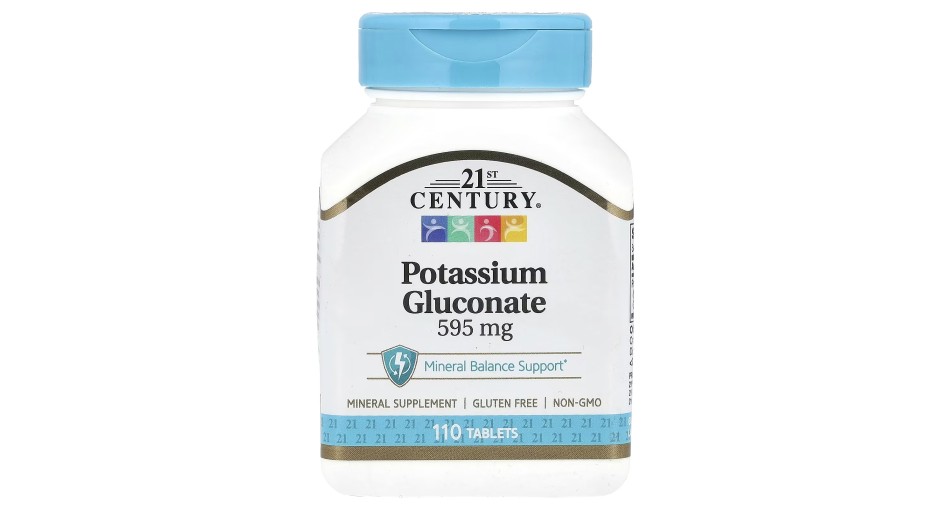
Potassium is a mineral found in many everyday foods and needed by the body every day. Here is a plain explanation of what potassium is, why people take it, how potassium tablets differ from powder, and how potassium citrate differs from gluconate.
Potassium is a mineral that belongs to the electrolytes. Electrolytes dissolve in the body's water and carry electrical signals. Together with sodium and magnesium, potassium takes part in the body's water and salt balance, so it is present in every cell.
The body gets potassium mainly from food. It is plentiful in potatoes, bananas, legumes (beans, lentils, chickpeas), spinach, avocado, dried fruit (apricots, prunes), nuts, fish and dairy. With a varied diet, many people get potassium without supplements.
The EU has approved these statements for potassium: potassium contributes to the normal functioning of the nervous system, to normal muscle function and to the maintenance of normal blood pressure. That is all that can be said about potassium as a supplement. It is not a medicine and does not treat any disease.
Potassium tablets and powder are chosen by people who train a lot, sweat often, follow a special diet or simply want to top up their diet. Athletes consider it together with other electrolytes such as magnesium and sodium. Read about magnesium separately in the Magnesium section.
In supplements, potassium is always bound to another substance, a compound. The compound gives the form its name.
All options are collected in the Potassium section.
Tablets and capsules are easy to use: take with water, nothing to mix. Powder, for example flavoured potassium citrate, is dissolved in water and drunk as a drink. This suits people who dislike swallowing tablets or want electrolytes during training.
The amount of potassium differs between products, so compare not only the weight of the tablet or powder but also the potassium content per serving shown on the label.
People with kidney problems and those taking medication for blood pressure or the heart must consult a doctor before taking potassium supplements. The kidneys remove excess potassium, and some medicines affect its level in the blood. Do not start potassium on your own in these cases.
Food supplements do not replace a varied diet. If you have chronic conditions, take medication, are pregnant or breastfeeding, consult a doctor.
What is potassium for?
Potassium contributes to the normal functioning of the nervous system, to normal muscle function and to the maintenance of normal blood pressure.
How does potassium citrate differ from gluconate?
They are different potassium compounds. Citrate is bound to citric acid, gluconate to gluconic acid. Go by the label and the serving on the package.
Can I get potassium from food alone?
Many people do: potatoes, bananas, legumes, spinach, avocado, nuts.
Can I take potassium without seeing a doctor?
Healthy adults should simply follow the serving on the package, but with kidney disease or when taking blood pressure or heart medication, see a doctor first.
Buy potassium tablets, capsules and potassium citrate powder in the Potassium section. Warehouse in Lviv, pickup available, delivery across Ukraine.